From Accepted Offer to Closing Day
Buying a Home Should Feel Exciting—not Confusing
We help keep the title and settlement side of your purchase organized, explain what happens next, and give you time to understand the documents before you sign.
The Boutique Difference
One person helping guide your purchase toward closing.
- One direct point of contact
- Clear explanations without rushed signing
- Coordination with agents, lenders, and other parties
- Residential purchases with or without financing
Your Purchase, Clearly Explained
What Happens After Your Offer Is Accepted?
An accepted offer begins a coordinated process involving the buyer, seller, real estate professionals, lender, title company, and other service providers.
The purchase agreement establishes the responsibilities, dates, and conditions of the transaction. Your inspections, financing, title work, insurance, final figures, and closing preparations may all be taking place at the same time.
Our role is to keep the title and settlement work organized, communicate with the authorized parties, and help you reach the closing table prepared.
Your Buyer Roadmap
Seven Steps Toward the Closing Table
The exact sequence depends on your agreement, financing, property, and circumstances, but most purchases include these general stages.
Open the Closing File
The signed agreement and available transaction details are provided so the title and settlement work can begin.
Complete Your Due Diligence
Work with your agent and appropriate professionals on inspections, property questions, and contract contingencies.
Complete Financing
When using a mortgage, respond to lender requests and work toward final underwriting approval.
Complete the Title Work
Public records and property information are reviewed, and requirements affecting the transfer are identified.
Arrange Insurance
Select the homeowner’s coverage needed for your property and satisfy any lender requirements.
Review Final Details
Review the final figures, verify the approved method for delivering funds, and complete the final walkthrough.
Sign and Close
Review and sign the required documents so the transfer, funding, disbursement, and recording process can be completed.
Your Purchase Team
Who Should You Contact?
Several professionals may be involved in your purchase. Knowing who handles each part can help you get answers more quickly.
Property and Contract
Real Estate Professional
- Purchase agreement questions
- Inspection and contingency coordination
- Negotiations with the seller
- Final walkthrough arrangements
- Key delivery coordination
Financing
Mortgage Lender
- Loan application and underwriting
- Interest rate and loan terms
- Appraisal requirements
- Mortgage disclosures
- Loan approval and funding
Title and Settlement
Title Company
- Title search and commitment
- Title insurance options
- Settlement figures and coordination
- Closing-fund instructions
- Signing, disbursement, and recording
Before Ownership Is Transferred
What Is the Title Company Looking For?
The title search helps identify recorded matters that may affect the property or the seller’s ability to transfer ownership.
The review may involve deeds, mortgages, liens, judgments, property taxes, easements, restrictions, and other available records connected with the property.
When an issue is identified, additional documentation, payment, releases, corrective work, or review may be needed before the transaction can be completed.
Learn About Title SearchesOwnership History
Reviewing the chain of recorded ownership and the seller’s interest in the property.
Mortgages and Liens
Identifying recorded obligations that may need to be paid, released, or otherwise addressed.
Taxes and Assessments
Reviewing available property-tax and related information affecting settlement.
Easements and Restrictions
Identifying recorded rights or limitations that may affect use of the property.
Two Different Policies
Lender’s Coverage and Owner’s Coverage Are Not the Same
When a mortgage is involved, the closing may include a lender’s title policy. Buyers may also have the opportunity to purchase a separate owner’s title policy.
Protects the Lender
Lender’s Title Insurance
A lender’s title policy protects the lender’s insured interest against certain covered title problems.
- Commonly required when obtaining a mortgage
- Connected with the lender’s loan interest
- Does not provide the same protection to the buyer
Protects the Owner
Owner’s Title Insurance
An owner’s title policy protects the buyer’s insured ownership interest against certain covered title problems.
- Separate from the lender’s policy
- Coverage depends on the policy’s terms
- Available to cash and financed buyers
Title insurance is subject to exclusions, exceptions, conditions, limits, and other policy terms. Ask questions about the available coverage before making your decision.

Before Closing
Keep the Purchase Agreement at the Center of the Process
The title company coordinates settlement, but it does not replace your agreement, inspections, or professional advisers.
Deposit or Earnest Money
Deliver the deposit according to the purchase agreement and the instructions from the authorized escrow holder. Do not assume the title company is holding the deposit unless that has been confirmed.
Inspections and Due Diligence
Complete inspections and other property investigations within the time allowed by the agreement. Discuss findings and contractual options with your agent, attorney, or appropriate professional.
Final Walkthrough
The final walkthrough is generally used to confirm the property’s condition and agreed-upon items shortly before closing. Raise concerns with your real estate professional as quickly as possible.
Stay Organized
Your Home-Buyer Checklist
Prompt responses and careful review can help reduce last-minute problems as your closing date approaches.
After the Agreement Is Signed
-
Save a complete copy of the agreement.
Track the important dates, contingencies, and responsibilities.
-
Deliver the deposit as directed.
Use only verified instructions from the proper escrow holder.
-
Schedule inspections promptly.
Allow enough time to review results before the contract deadline.
-
Respond to the title company.
Provide names, contact information, and any requested documentation.
-
Continue the mortgage process.
Financed buyers should respond promptly to lender and underwriting requests.
As Closing Approaches
-
Arrange homeowner’s insurance.
Confirm the coverage and effective date needed for your transaction.
-
Review the title information.
Ask questions about requirements, exceptions, and title insurance options.
-
Review the final figures.
Financed buyers should compare the Closing Disclosure with the expected loan terms.
-
Verify closing-fund instructions.
Call a previously confirmed telephone number before sending money.
-
Complete the final walkthrough.
Report unresolved property concerns before arriving at the closing table.
Understanding the Final Figures
Purchase Price, Closing Costs, and Cash to Close
The amount needed at closing is more than a simple subtraction of the mortgage from the purchase price.
Purchase Price
The agreed price of the property before deposits, credits, financing, costs, and adjustments are applied.
Closing Costs
Charges may include lender fees, title services, recording charges, insurance, taxes, inspections, prepaid items, and other transaction expenses.
Credits and Deposits
Earnest money, lender credits, seller credits, and other applicable amounts may reduce the balance due.
Cash to Close
The final amount the buyer must deliver after the loan, deposits, credits, costs, and adjustments have been calculated.
Wait for the Final, Verified Amount
Do not send closing funds based on an early estimate, an unexpected email, or instructions that have not been independently verified with our office.
Review Your Closing Disclosure Before Signing
For covered mortgage transactions, the lender generally must ensure that you receive the Closing Disclosure at least three business days before the scheduled closing.
Compare it with your most recent Loan Estimate and review the loan amount, interest rate, payment, costs, credits, and cash-to-close figure. Contact your lender or settlement representative when something appears incorrect or unexpected.
View the CFPB Closing Disclosure Explainer →At the Closing Table
What Happens on Closing Day?
Closing is the point where the paperwork, funds, and requirements come together so ownership can be transferred.
Your Identification Is Reviewed
The closing agent confirms the identity of the signers and reviews the required identification.
The Documents Are Explained
You have time to review the general purpose of the documents and ask questions before signing.
The Signing Is Completed
The deed-related, settlement, loan, and other required documents are completed as applicable.
Funding and Recording Follow
After the requirements are satisfied, funds are disbursed and recordable documents are submitted.
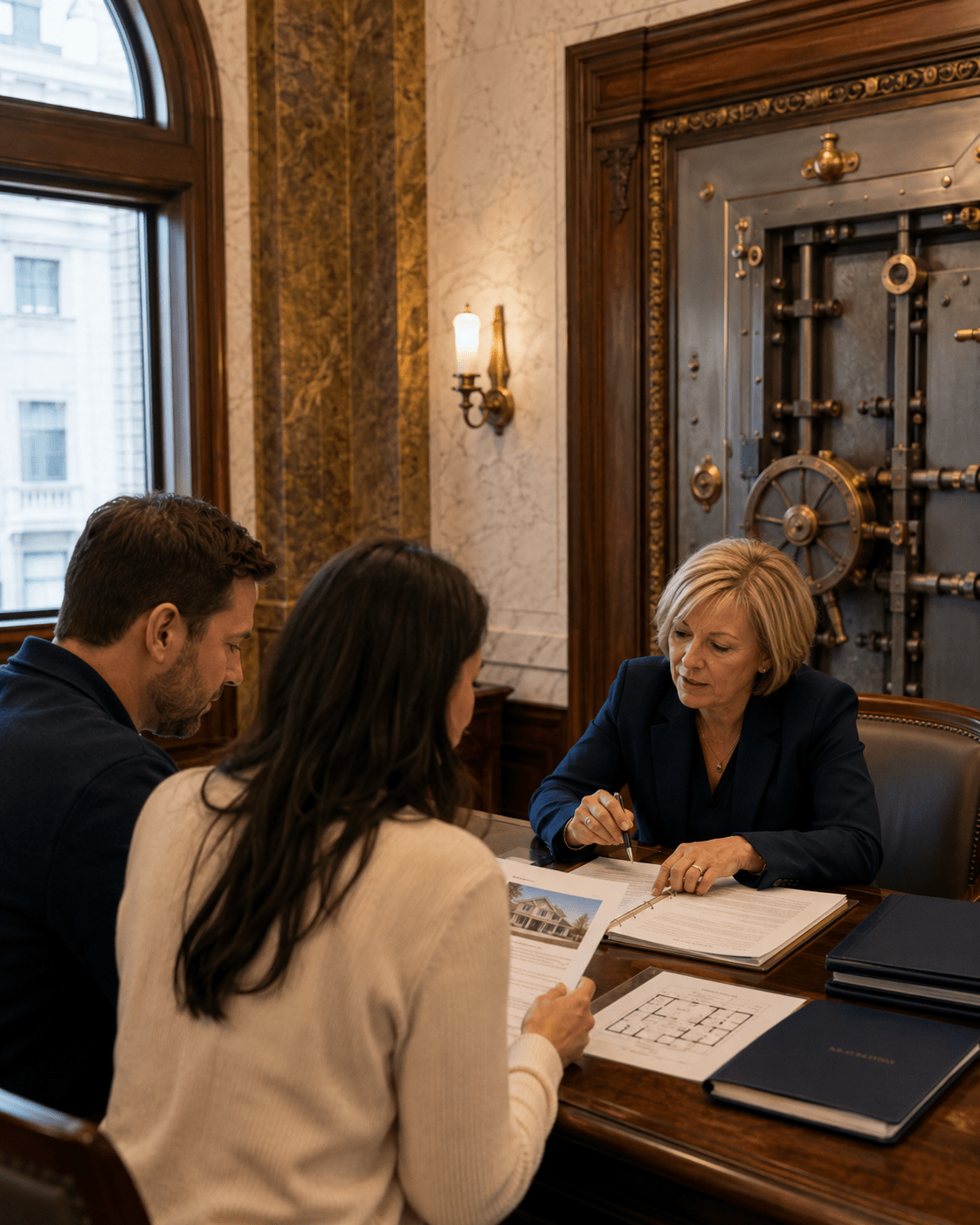

A Closing Room with a History
Close in Pennsburg’s Former Farmers Bank
Our upstairs conference room provides a quiet, professional place to complete one of life’s most important purchases.
The former Farmers Bank building was constructed in 1926. Its upstairs meeting space was historically used for closings and important financial conversations.
Nearly a century later, the room continues that tradition with a personal closing experience where questions are welcomed and documents are not rushed.
See Our Historic LocationProtect Your Purchase
Verify Before You Send Closing Funds
Criminals may imitate a title company, lender, attorney, or real estate professional and send fraudulent wiring instructions shortly before closing.
Trust an unexpected email claiming that the payment instructions or receiving account have changed.
Call our office using a previously confirmed telephone number and verify the instructions.
Common Buyer Questions
Arrive at Closing Prepared
Every purchase is different. We welcome questions about the title and settlement steps connected with your individual transaction.
View All FAQsWhen should the title file be opened?
The file should generally be opened soon after the agreement is signed. Starting early provides more time to complete the title work and address unexpected matters before closing.
Does the title company hold my deposit?
Not always. The purchase agreement should identify the escrow holder. The deposit may be held by a real estate broker, title company, attorney, or another authorized party.
Do cash buyers still need title work?
A cash purchase does not have a mortgage lender, but the buyer still needs to understand the property’s title and the requirements for transferring ownership.
Do I need owner’s title insurance?
Owner’s title insurance is separate from a lender’s policy. Review the available coverage, exceptions, conditions, and cost before deciding whether to purchase it.
When will I know the final amount due?
The amount is finalized after the loan, costs, credits, deposits, taxes, and other adjustments have been completed. Wait for verified final instructions before sending funds.
What identification should I bring?
Review the instructions provided before closing. Identification requirements may depend on the transaction and documents being signed.
When will I receive the keys?
Key delivery depends on the purchase agreement, completion of the transaction, and coordination between the parties and their real estate professionals.
Independent Buyer Resources
Learn More About Buying a Home
These government resources provide additional educational information about mortgages, closing documents, insurance, and the home-buying process.
Buying a House
Tools covering the process from preparing to buy through the mortgage closing.
Visit Resource → CFPB ResourceClosing Disclosure
An interactive guide to reviewing the final mortgage terms and costs.
Visit Resource → Pennsylvania ResourceHomeowner’s Insurance
Consumer information from the Pennsylvania Insurance Department.
Visit Resource →General Information Only: This page provides general educational information and is not legal, tax, lending, financial, inspection, insurance, or real estate advice. Requirements vary based on the property, purchase agreement, lender, title underwriter, applicable law, and individual circumstances.
Buying a Home?
Start Your Closing with a Conversation
Tell us about the property and purchase. We will review the information and personally contact you about the next step.